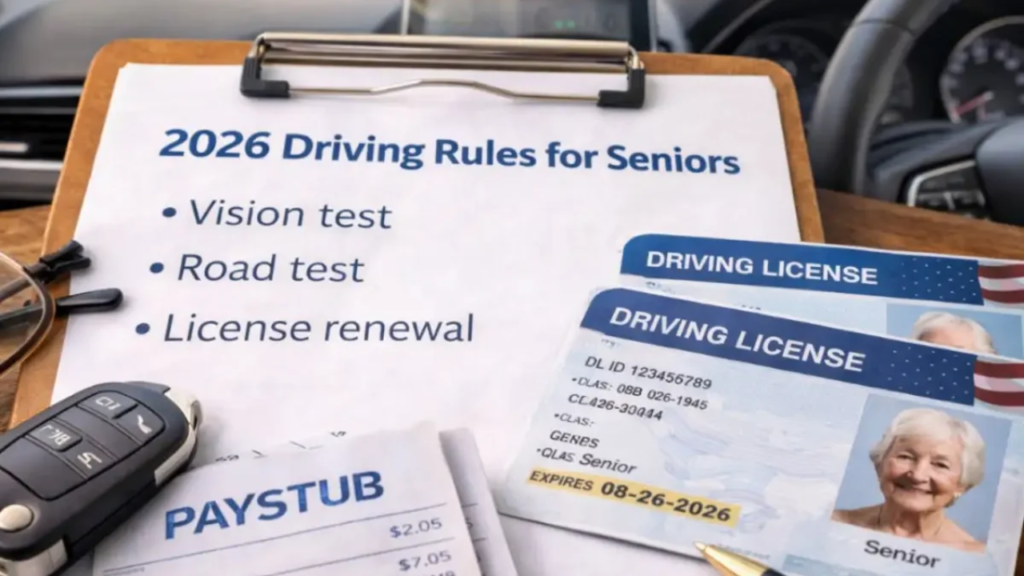
Starting February 1, 2026, U.S. states must implement stricter driver’s license renewal rules for seniors aged 65 and older, following federal Department of Transportation guidelines. These changes aim to enhance road safety by addressing age-related declines in reaction time, vision, and cognition. While states retain flexibility in enforcement, the core requirements standardize evaluations nationwide, sparking debate among advocacy groups and families.
Core Requirements for Seniors 65+
Drivers aged 65 to 74 will renew licenses every four years instead of the typical eight-year cycle in many states. Those 75 and older face biennial renewals, doubling previous frequencies for some. Mandatory cognitive screenings become standard at renewal, using quick tests for memory, attention, and decision-making, administered at DMVs or approved clinics.
Physicians gain a formal role, required to report patients with diagnosed conditions like dementia that impair driving safely. This builds on existing laws in about half of states but expands to all, with protections against liability for good-faith reports. Vision exams remain baseline, now paired with these mental acuity checks.
Triggered Road Tests After Incidents
Any at-fault accident involving a driver over 70 prompts a mandatory road test, regardless of severity—even minor fender-benders qualify. Failing this retest could lead to restrictions like daytime-only driving or full suspension until retraining completes. States must track these incidents via national databases for consistent application.
Renewal Frequency Comparison Table
| Age Group | Old Renewal Period | New Renewal Period (Feb 1, 2026) | Additional Tests |
|---|---|---|---|
| Under 65 | 4-8 years | Unchanged | None routine |
| 65-74 | 4-8 years | Every 4 years | Cognitive screen + vision |
| 75+ | 4-8 years | Every 2 years | Cognitive screen + vision |
| 70+ Post-Accident | Varies | Mandatory road test | Full skills evaluation |
Proponents cite statistics showing drivers over 80 involved in fatal crashes at triple the rate of middle-aged adults per mile driven. Cognitive decline contributes to 20% of senior crashes, per NHTSA data, justifying proactive measures over reactive penalties. These rules align with REAL ID enhancements, ensuring secure IDs while prioritizing competence.
Families report relief, as tools like the new rules help start tough conversations about independence. Rural seniors, reliant on cars for medical access, face the biggest adjustments, prompting states to expand shuttle services and ride-share subsidies.
Pushback from Senior Advocates
AARP and similar groups argue the rules unfairly single out age over ability, noting a healthy 70-year-old outperforms some impaired 40-year-olds. Legal challenges loom in courts, claiming equal protection violations under the Constitution. Critics demand data proving broad screenings outperform targeted medical referrals.
Implementation varies: California adds in-person interviews, while Florida emphasizes voluntary assessments. Costs for extra tests—up to $150—burden fixed incomes, though waivers exist for low earners.

Preparation Steps for Affected Drivers
Schedule renewals early via state DMV portals to beat February rushes. Practice cognitive exercises through apps or senior centers to sharpen skills. Update wills and emergency contacts, as license changes may signal broader planning needs.
Consult primary doctors now for baseline health reports, easing future reports. Free workshops from AAA chapters offer mock tests and advocacy tips.
Impact on Daily Lives
These rules reshape routines for 50 million licensed seniors, potentially increasing isolation without alternatives. Yet, safer roads benefit everyone, with early evidence from pilot states showing 15% fewer senior-involved collisions. Transportation Secretary’s office promises annual reviews to refine based on outcomes.
FAQs
Q1: Do all states enforce these equally?
No, but all adopt core federal mandates with local tweaks.
Q2: Can I appeal a failed test?
Yes, most states allow hearings and retests within 30 days.
Q3: Are there exemptions for rural drivers?
Limited; some states offer waivers or virtual options.
Disclaimer
The content is intended for informational purposes only. Check official sources; our aim is to provide accurate information to all users.