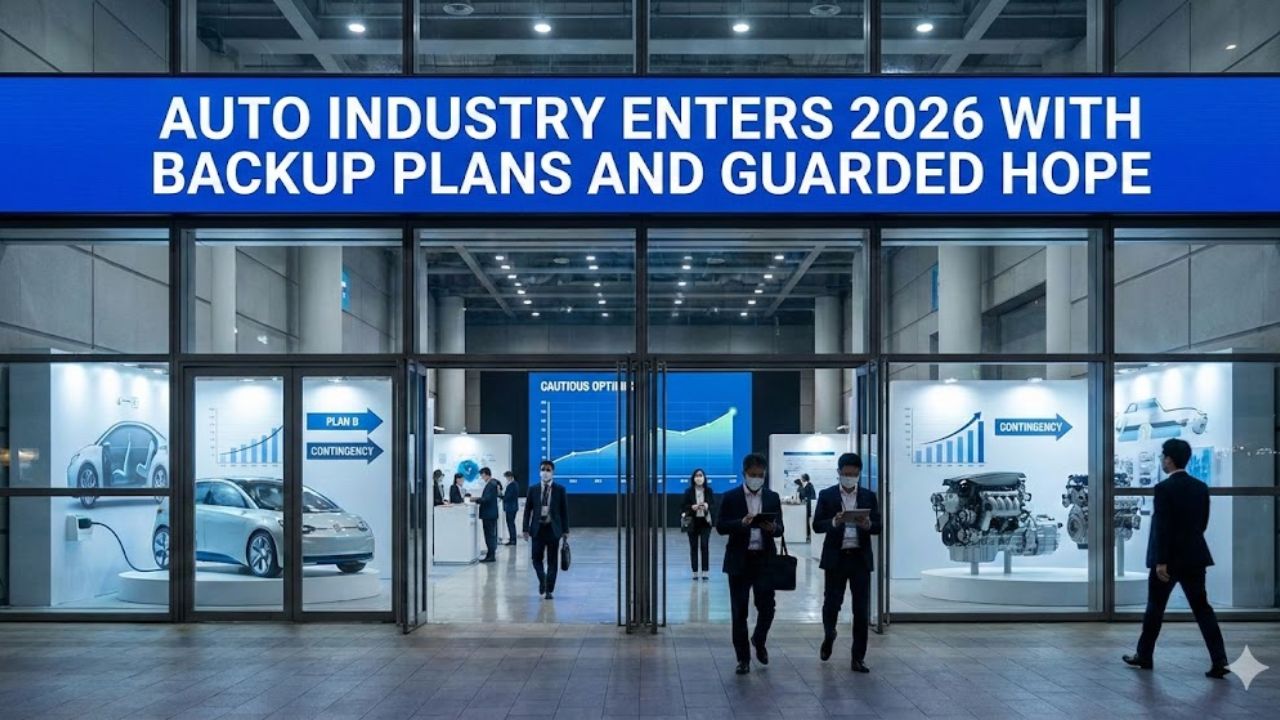
The global automotive industry enters 2026 not with the unbridled optimism of a decade ago, but with a sense of tempered realism. Executives and analysts alike are describing the mood as “guarded hope.” The grand visions of a fully electric, autonomous future have clashed with the hard realities of economics, infrastructure, and consumer behavior. As a result, 2026 is shaping up to be the year of the “backup plan,” where automakers pivot from singular moonshots to diversified survival strategies.
The Great Hybrid Pivot
Perhaps the most significant shift entering 2026 is the industry’s collective embrace of hybrid technology as a long-term staple rather than a mere bridge. For years, the narrative suggested that hybrids were a temporary stopgap on the road to pure electric vehicles (EVs). However, cooling EV demand in major markets like the United States and Europe has forced a strategic rethink. Major automakers are now doubling down on “multi-pathway” strategies, investing heavily in extended-range electric vehicles (EREVs) and plug-in hybrids (PHEVs). This backup plan ensures they can meet emission standards without betting the farm on consumer adoption rates that haven’t materialized as quickly as predicted.
Data Outlook: 2025 vs. 2026 Projections
The following table illustrates the shift in expectations and the stabilization of market dynamics as the industry adjusts to new realities.
Trade barriers have become a central theme for 2026, complicating global supply chains. The “guarded” aspect of the industry’s hope is largely due to the unpredictable nature of international tariffs. With new levies on Chinese electric vehicles in Europe and North America, and retaliatory measures looming, automakers are scrambling to localize production. This geopolitical friction is forcing companies to rethink where they build cars, moving away from global efficiency models to regional “safe harbors” to avoid punitive taxes.
The Affordability Ceiling
For the average consumer, 2026 presents a mixed bag. While supply chains have normalized, the era of cheap new cars appears to be over. High interest rates and the rising cost of “software-defined vehicles” have pushed new vehicle transaction prices to record highs. Consequently, the used car market is experiencing a renaissance. Consumers who are priced out of the new car market are turning to certified pre-owned vehicles, keeping demand and prices for used cars surprisingly robust. Automakers are responding by keeping older, more affordable internal combustion engine models in production longer than originally planned.
Tech Reality Check
Technology remains a battleground, but the focus has shifted from “full autonomy” to “driver assistance.” The dream of Level 5 self-driving robotaxis replacing personal car ownership has been pushed further toward the horizon. In 2026, the emphasis is on AI-driven features that enhance safety and convenience within the current ownership model. However, monetizing these software features remains a challenge, as consumers show resistance to subscription models for hardware they already own.
Regional Divergence
While the West grapples with saturation and transition pains, markets like India and China tell a different story. India is projected to see healthy growth of 6-8%, driven by a young demographic and government infrastructure pushes. Conversely, Chinese automakers, facing a slowing domestic economy, are aggressively targeting export markets, creating fierce competition in Southeast Asia, South America, and Africa. This divergence means that a “global” strategy is no longer a one-size-fits-all approach; what works in Mumbai will likely fail in Michigan.
Conclusion: Stability in Diversity
Ultimately, 2026 will be defined by flexibility. The automakers likely to succeed are not those with the purest ideology, but those with the most adaptable manufacturing footprints and diverse product portfolios. By hedging their bets with robust hybrid lineups and cautious EV rollouts, the industry is building a safety net. The hope is there, but it is supported by a pragmatic acceptance that the road ahead is winding and potentially unpaved.
FAQs
Q1 Why are hybrid sales expected to grow faster than EVs in 2026?
Hybrids offer a solution to consumers who want better fuel economy without the “range anxiety” or charging infrastructure concerns associated with full EVs. They are also generally more affordable, making them an attractive option in a high-interest economic environment.
Q2 Will car prices go down in 2026?
It is unlikely that new car prices will drop significantly. While some manufacturing costs have stabilized, high interest rates and the inclusion of expensive technology keep prices elevated. However, incentives might increase slightly as dealers try to move inventory in a slowing market.
Q3 What is a “software-defined vehicle”?
This term refers to modern cars where the functionality and features are primarily managed by software rather than mechanical hardware. This allows for over-the-air updates to improve performance or add features, similar to how a smartphone receives updates.
Disclaimer
The content is intended for informational purposes only. you can check the officially sources our aim is to provide accurate information to all users.