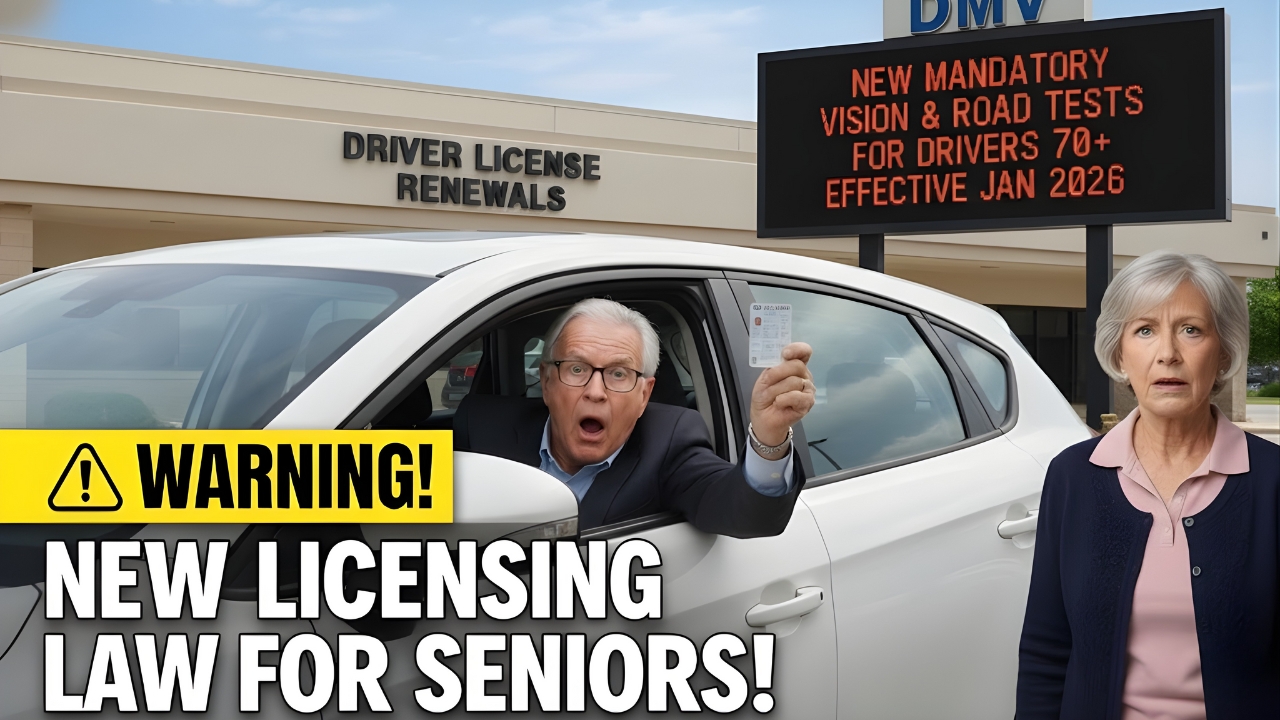
By January 1, 2026, most elderly drivers will be driving in an environment where state laws are changing to ensure individual freedom and overall safety. Although the rumors tend to talk about a federal takeover of the licensing, the truth is that such states as California, Florida, and Texas will be left with their own specific updates as their leaders. To drivers of 70 and above, the year 2026 will not only represent a number of birthdates but an advance toward a kind of proactive safety approach, which will include increasingly frequent check-ins and more advanced screening methods.
In Person Renewals and Vision Checks are mandatory
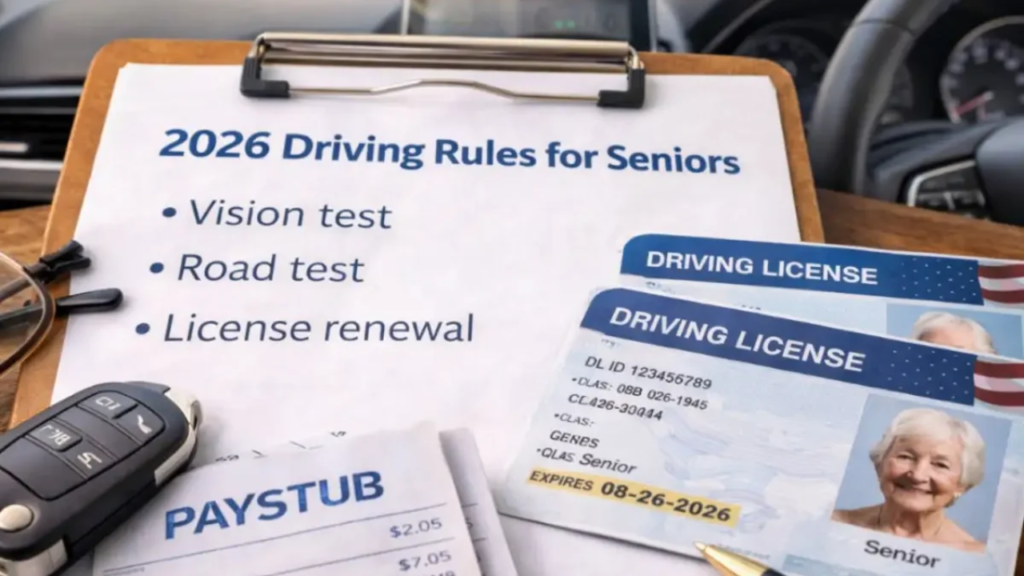
The most common shift in 2026 is that the majority of seniors will no longer be able to renew their online or via mail. In some states such as California, drivers above 70 years are now expected to be present in a DMV office every time they renew their licenses. This has been mainly because of the compulsory vision test whereby age-related illnesses such as cataract or glaucoma are identified at an early stage. Assuming that a driver has failed the initial screening, they are usually provided with a medical form, which their eye specialist should fill, which lets him or her make a more subtle assessment regarding whether they can see the road or not.
The Staggered Renewal Cycle
One major change in 2026 is the adoption of age-based validity where the duration of time in which a license is valid reduces as a driver advances in age. An example is that in Texas, driver licenses of ages between 79 and 84 should be renewed after every six years, however, after age 85, the period reduces to every two years. On the same note, Illinois has gone ahead to introduce a tiered system that can be used in 2026 wherein drivers aged 87 and above will be required to take an annual road test. Those shorter cycles enable the state to keep a closer eye on the fluctuations of physical and cognitive health as compared to the standard eight-year adult cycle of renewal.
Computerized Reaction-Time and Reflex Testing
Realizing that driving is a right guaranteed by dignity and autonomy, 2026 laws focus on Restricted Licenses instead of full suspension. When a senior demonstrates minor changes in his or her eyesight or response time, they can possibly be assigned a license with an exception enabling him or her to drive only during the day, with a certain radius of his or her place of residence or without major freeways. This customized licensing model will enable the elderly Americans to keep running their errands and visiting their family in the familiar locations, but they will be reducing the risk of night driving or high speed interchange involving intricate complex interchange work.
Reporting and Medical Re-evaluations
Though there is no state in which a license is revoked due to age alone, 2026 has introduced more explicit requirements when it comes to family initiated reports. The process of demanding a Medical Re-evaluation has become much easier by involving family members, physicians, and the police, who can identify particular safety behaviors, including losing direction in well-known locations, or a tendency to have minor fender benders. Such reports are private and lead to a review procedure which involves vision test, medical history and possible drive test. This is a safety net and it makes sure that the age does not dictate who is behind the wheel but the health problems.
2026 State Renewal Comparison
| State | In-Person Age | Renewal Cycle | Special Requirement |
| California | 70+ | Every 5 Years | Mandatory Vision Test |
| Texas | 79+ | 2 Years (at 85+) | In-person Vision Exam |
| Florida | 80+ | Every 6 Years | Mandatory Vision Test |
| Illinois | 87+ | Every 1 Year | Mandatory Road Test |
Frequently Asked Questions (FAQs)
Q: Can the seniors have a new federal law in 2026?
No. Although an overarching federal system of safety exists, the driver’s licenses are still in the jurisdiction of states. No nationwide driving ban of 70 plus.
Q: When I am 70 years old, will I be required to take a written test?
In most states, such as California, the written test is waived in case of seniors who have clean driving records. But there is almost always a need of a vision test and a new photo.
Q: Could I be appealing in case my license is restricted?
Yes. Every state has a process of DMV hearing or review during which you have to be able to present medical evidence and/or take a supplemental driving test to demonstrate that you are competent in driving.
Disclaimer
The information is informational in nature. You might have to verify the official sources since we intend to give correct information to every user. To find out more refer to the U.S. Department of Transportation (DOT) or to your individual State DMV Senior Driver Portal.